




Contact Lens Eye Infection Dubai
قرحة القرنية الناتجة عن العدسات اللاصقة في دبي: علامات تحذيرية لا يجب تجاهلها
Corneal ulcer from contact lenses in Dubai is a serious eye problem that can happen when contact lenses are used incorrectly, worn for too long, slept in, cleaned poorly, or exposed to water. A corneal ulcer is not just simple redness or mild irritation. It may be a sight-threatening infection or inflammation affecting the clear front surface of the eye.
If you wear contact lenses and notice eye pain, redness, tearing, light sensitivity, blurred vision, discharge, or a feeling that something is inside your eye, you should stop wearing your lenses and book an urgent eye examination.
هام: Contact lens users should take red eye with pain, blurred vision, light sensitivity, discharge, or a white spot on the cornea seriously. Do not continue wearing contact lenses while symptoms are present. Early diagnosis can help reduce the risk of corneal scarring and vision complications.
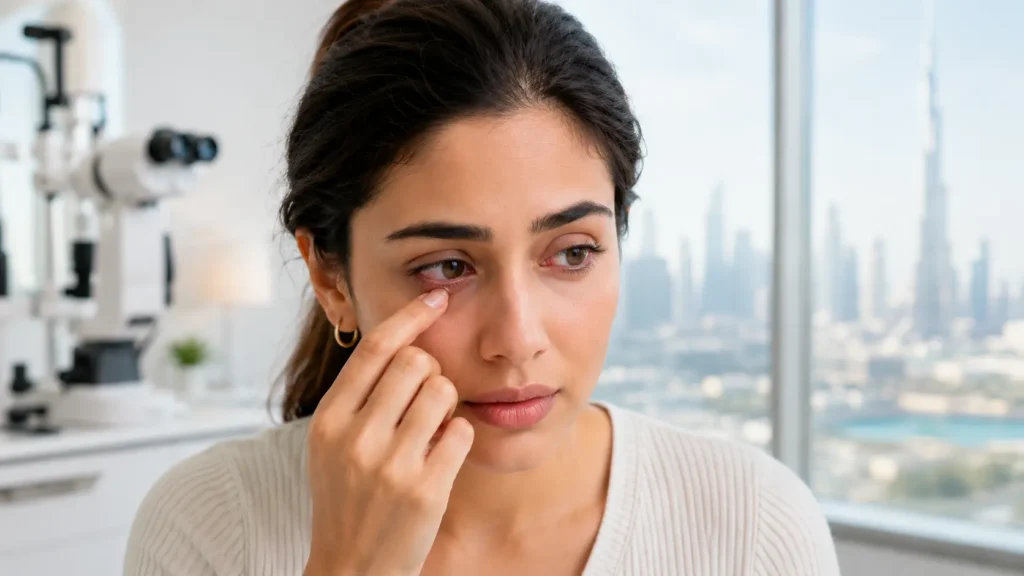
Contact lens-related corneal ulcer warning signs and urgent eye care at Ebsaar Eye Surgery Center in Dubai.
Quick Answer: Can Contact Lenses Cause a Corneal Ulcer?
Yes. Contact lenses can increase the risk of corneal infection and corneal ulcer if they are worn incorrectly, slept in, cleaned with poor hygiene, used longer than recommended, or exposed to water. A corneal ulcer from contact lenses in Dubai should be checked quickly because delayed treatment can lead to corneal scarring, reduced vision, or more serious complications.
Watch Dr. Sylvie Gwargy Explain the Warning Signs
In the video, Dr. Sylvie Gwargy – Specialist Ophthalmology explains when contact lens users should worry, why eye pain and light sensitivity should not be ignored, and why early examination matters before a corneal ulcer becomes more serious.
Watch the full Reel: Dr. Sylvie Gwargy explains why contact lens users should not ignore pain, redness, tearing, light sensitivity, blurred vision, or a foreign body sensation.
ما هو قرحة القرنية؟
A corneal ulcer is an open sore or damaged area on the cornea, the clear front window of the eye. The cornea helps focus light, so any infection, inflammation, scratch, or ulcer in this area can affect comfort and vision.
In many cases, a corneal ulcer is linked to infection. Contact lens wear is one of the major risk factors because lenses sit directly on the eye surface. If bacteria, fungi, or other organisms reach the cornea, the infection may progress quickly, especially when the lens has been worn overnight or handled without proper hygiene.
Why Contact Lenses Can Become Risky
Contact lenses are safe for many people when prescribed and used correctly. The problem starts when lenses are treated casually. Sleeping in contact lenses, wearing them for long hours, showering or swimming with lenses, topping up old solution, using expired lenses, or skipping lens case hygiene can increase the risk of eye infection.
For patients searching for قرحة القرنية من العدسات اللاصقة في دبي, the key message is simple: do not ignore warning signs. A painful red eye in a contact lens wearer should be checked by an eye doctor, especially if vision is blurry or light feels uncomfortable.
Sleeping in Lenses
Sleeping or napping with contact lenses can reduce oxygen to the cornea and raise the risk of contact lens-related infection.
Long Wearing Hours
Wearing lenses longer than recommended can dry and irritate the eye surface, making the cornea more vulnerable.
Poor Lens Hygiene
Unwashed hands, dirty cases, old solution, or poor cleaning habits can allow germs to reach the eye.
Water Exposure
Showering, swimming, or rinsing lenses with water can expose lenses to organisms that may cause serious infection.
Expired or Damaged Lenses
Old, damaged, or poorly fitting lenses can scratch the cornea and increase irritation or infection risk.
Ignoring Symptoms
Continuing to wear lenses after redness, pain, or blurred vision appears can allow the problem to progress.
Warning Signs of a Corneal Ulcer
A corneal ulcer can feel more intense than normal dryness or mild contact lens discomfort. The symptoms may appear suddenly or become worse over hours or days.
Book an Urgent Eye Check If You Notice
Contact Lens Discomfort vs Corneal Ulcer
Not every uncomfortable lens means you have a corneal ulcer. However, some symptoms should never be treated as normal contact lens irritation. The comparison below can help you understand when the situation may be more serious.
What Should You Do Immediately?
If you suspect a contact lens-related infection or corneal ulcer, do not try to push through the pain. The safest first step is to remove the lens and get professional eye care.
- Remove your contact lenses immediately.
- Do not wear the same lenses again unless your eye doctor says it is safe.
- Do not use steroid eye drops unless prescribed by an ophthalmologist.
- Do not patch the eye without medical advice.
- Keep the lenses, case, and solution if the doctor asks to inspect them.
- Book an urgent eye examination if you have pain, redness, light sensitivity, discharge, or blurred vision.
How an Eye Doctor Checks for a Corneal Ulcer
During an eye examination, the doctor may use a slit lamp microscope to look closely at the cornea, eyelids, tear film, and eye surface. A special dye may be used to highlight corneal scratches or ulcers. If infection is suspected, the doctor may recommend further testing depending on severity.
Treatment depends on the cause and may include prescription antibiotic, antiviral, antifungal, lubricating, or anti-inflammatory treatment under close medical supervision. Follow-up is important because corneal infections can change quickly.
Can a Corneal Ulcer Affect Vision?
Yes. A corneal ulcer can affect vision, especially if it is central, deep, large, or treated late. Possible complications may include corneal scarring, irregular corneal surface, reduced vision, or the need for advanced corneal treatment in severe cases.
This is why early assessment is important. The earlier the cause is diagnosed and treated, the better the chance of protecting the cornea and long-term vision.
How to Reduce Contact Lens Infection Risk
Prevention is a major part of contact lens safety. Contact lenses are medical devices, so they should be used exactly as advised by your eye care professional.
Contact Lens Safety Checklist
Why Contact Lens Users in Dubai Should Be Careful
Dubai’s environment can make contact lens comfort more challenging for some patients. Air conditioning, dust, sand, long screen hours, dry indoor air, and outdoor exposure may worsen dryness or irritation. When the eye surface is already irritated, poor lens habits may increase the risk of complications.
If you often experience redness, dryness, burning, or blurry vision with lenses, do not just change brands without checking your eyes. You may need a dry eye assessment, corneal evaluation, contact lens fitting review, or a different vision correction plan.
When Should You Stop Wearing Contact Lenses?
Stop wearing contact lenses and book an eye check if you develop pain, redness, blurred vision, discharge, swelling, light sensitivity, or a repeated foreign body sensation. You should also stop lenses after an eye injury, suspected infection, or if lenses suddenly become painful.
Call Now for Contact Lens Eye Infection Symptoms
If you wear contact lenses and have pain, redness, tearing, light sensitivity, blurred vision, or a feeling that something is inside your eye, book an urgent eye check at Ebsaar Eye Surgery Center in Dubai.
لماذا تختار مركز إبصار لجراحة العيون في دبي؟
مركز إبصار لطب العيون provides advanced ophthalmology care in Dubai, including cornea and eye surface care, dry eye treatment, keratoconus assessment, comprehensive eye examinations, vision correction, cataract surgery, retina care, and glaucoma management.
For patients with suspected قرحة القرنية من العدسات اللاصقة في دبي, Ebsaar focuses on careful examination, early diagnosis, modern diagnostic technology, and personalized treatment planning to protect corneal health and vision.
Better Vision. Better Life.
Book a Free Eye Consultation in Dubai
If you wear contact lenses and notice any unusual symptom, do not wait for the problem to become worse. Book your eye check at Ebsaar Eye Surgery Center in Dubai.
احجز موعدكFrequently Asked Questions About Contact Lens Corneal Ulcers
هل يمكن أن تسبب العدسات اللاصقة قرحة في القرنية؟
نعم. يمكن أن تزيد العدسات اللاصقة من خطر الإصابة بعدوى القرنية وقرحة القرنية عند ارتدائها بشكل غير صحيح، أو النوم بها، أو تنظيفها بشكل سيء، أو استخدامها لفترة طويلة، أو تعرضها للماء.
ما هي علامات التحذير لقرحة القرنية؟
قد تشمل العلامات التحذيرية ألمًا في العين، احمرارًا، دموعًا، حساسية للضوء، تشوشًا في الرؤية، إفرازات، تورمًا في الجفن، أو الشعور بوجود جسم غريب في العين.
هل يجب علي ارتداء العدسات اللاصقة إذا كانت عيني حمراء؟
لا. إذا كان لديك احمرار أو ألم في العين، أو حساسية للضوء، أو تشوش في الرؤية، فقم بإزالة العدسات واحجز موعدًا لفحص العين قبل ارتدائها مرة أخرى.
النوم بالعدسات اللاصقة خطير؟
يمكن أن يزيد النوم بالعدسات اللاصقة من خطر الإصابة بالعدوى البكتيرية في العين المرتبطة بالعدسات اللاصقة. يجب تجنب ذلك إلا إذا نصح طبيب العيون الخاص بك بجدول استخدام آمن.
Can a corneal ulcer affect vision?
Yes. A corneal ulcer can affect vision, especially if it is severe, central, deep, or treated late. Early diagnosis helps reduce the risk of corneal scarring and vision complications.
Where can I book treatment for contact lens eye infection in Dubai?
يمكنك حجز موعد في مركز إبصار لجراحة العيون في دبي for contact lens-related eye infection symptoms, cornea assessment, and personalized treatment recommendations.