



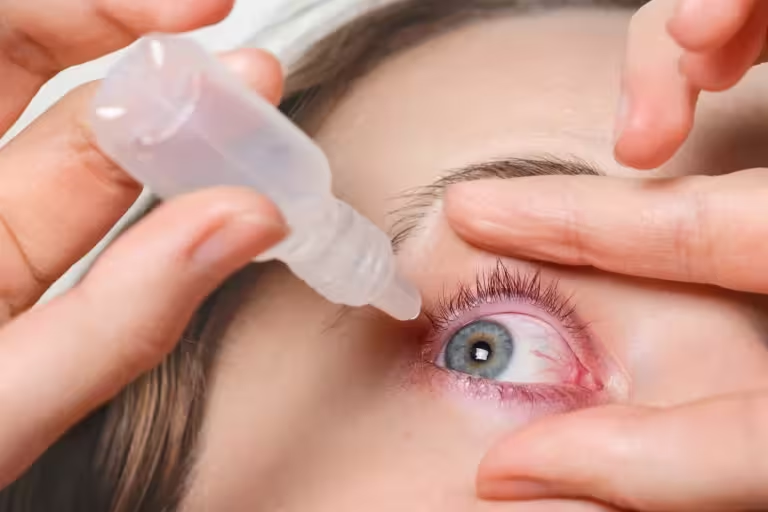
Pain or vision change?
That needs faster assessment than routine lid irritation.
Eyelid & ocular-surface care in Dubai
Eyelid and external-eye care evaluates problems affecting the eyelids, lashes, conjunctiva and nearby ocular surface—including chalazion, blepharitis, eye allergy, swelling, irritation and selected infections.
A lump, itching, crusting and redness can come from different conditions. The useful first step is to identify where the inflammation is and what pattern it follows, then match treatment to the diagnosis.
Medically reviewed by Prof. Dr. Hani Sakla Last reviewed
That needs faster assessment than routine lid irritation.
Allergy becomes more relevant, especially when both eyes are involved.
Blepharitis and lid-margin inflammation move higher on the list.
Chalazion and stye need to be distinguished before treatment.
The topic in 60 seconds
External-eye symptoms overlap. These quick cards help explain the patterns—without pretending they can replace an examination.
Start here
Definition
Eyelid and external-eye conditions are problems affecting structures at the front of the eye—especially the eyelids, lid margins, lashes, conjunctiva, tear film and nearby ocular surface.
They can feel similar because many produce redness, swelling, irritation, watering or a foreign-body sensation. The important clinical question is not only “what symptom do you have?” but also where the problem starts, whether it is focal or diffuse, whether itching or pain dominates, and whether vision is affected.
At Ebsaar, this page is an umbrella guide. Individual conditions such as chalazión, blefaritis, alergia ocular y dry eye may need different treatment plans.
Do not confuse them
These are common reasons for eyelid redness or swelling, but their patterns are different.
| Condition | Typical pattern | Pain / itch clue | What helps distinguish it |
|---|---|---|---|
| Chalazión | Localized eyelid lump from a blocked oil gland | Often less painful | Focal lump; may persist after initial inflammation |
| Stye (hordeolum) | Localized inflamed eyelid bump | Usually more tender or painful | Acute focal tenderness near a lash or gland |
| Blefaritis | Inflamed lid margins with crusting or flakes | Burning, irritation and sometimes itch | Lash-line changes; often recurrent or chronic |
| Eye allergy | Watery, red, swollen eyes; often bilateral | Itching is a key clue | Allergy exposure/history and bilateral pattern |
Sources: NEI — Blepharitis, AAO — Stye & Chalazion, AAO EyeWiki — Allergic Conjunctivitis.
Common causes
| Category | Examples | Common clues |
|---|---|---|
| Lid-margin inflammation | Anterior or posterior blepharitis | Crusting, burning, irritated lid edges |
| Blocked oil gland | Chalazión | Localized lump or swelling |
| Allergic inflammation | Seasonal or perennial allergic conjunctivitis | Itching, watering, redness, swelling |
| Infection | Selected eyelid or conjunctival infections | Discharge, tenderness or acute inflammation depending on cause |
| Tear-film / oil-gland dysfunction | Meibomian gland dysfunction with dry-eye overlap | Burning, fluctuating comfort, dryness or watering |
| Cosmetic / contact exposure | Makeup, lash adhesives, irritants or contact-lens related surface stress | Symptoms linked to a product, procedure or exposure |
Symptoms
One spot or the whole lid can look puffy.
Especially important when allergy is suspected.
Can occur with allergy, irritation or tear-film problems.
Often appears around the eyelashes in blepharitis.
A focal bump may be a chalazion or stye.
Needs more urgent assessment, especially if severe or sudden.
Diagnosis
Your doctor asks when symptoms began, whether one or both eyes are affected, what makes them worse, and whether there is allergy, skin disease, dry eye, contact-lens use or a recurring lump.
The lids, lashes, oil-gland openings, conjunctiva, tear film and corneal surface are examined. Blepharitis diagnosis is commonly based on history and characteristic examination findings.
Additional testing is chosen when the appearance is atypical, recurrent, severe or suggests another condition. Recurrent or atypical chalazia may require further evaluation.
Interactive symptom guide
Select the symptoms that match. This tool explains patterns only—it does not diagnose you.
We’ll show the educational pattern that most closely matches and flag features that need faster assessment.
Treatment
| Approach | Often used for | What it aims to do | Important note |
|---|---|---|---|
| Lid hygiene | Blepharitis / lid-margin disease | Reduce crusting and control inflammation triggers | Often needs regular ongoing care |
| Warm compresses | Selected chalazion and blepharitis cases | Support gland drainage and soften debris | Technique depends on the diagnosis |
| Allergy control | Allergic conjunctivitis | Reduce itch, redness and watering | Prescription drops should be clinician-guided |
| Prescription medication | Selected inflammatory or infectious causes | Treat the identified mechanism | Not every red eye needs an antibiotic or steroid |
| Minor office procedure | Persistent chalazion | Drain or reduce a persistent lesion | Considered after an ophthalmic assessment |
Regular eyelid cleaning and warm compresses are common first-line parts of blepharitis management. Because blepharitis can recur, the plan often focuses on control rather than a one-time cure. National Eye Institute ↗
For a stye or chalazion, the AAO patient guide describes warm compresses for 10–15 minutes at a time, 3–5 times a day. Do not squeeze or pop the lump.
Allergy care may include avoiding known triggers, cool compresses, lubricating drops and anti-allergy medication. The exact plan depends on the type and severity of allergic conjunctivitis. AAO EyeWiki ↗
Antibiotic, anti-inflammatory or other prescription eye treatment is selected when the examination supports it. Steroid eye drops should not be self-started because they require appropriate diagnosis and monitoring.
If a chalazion persists, becomes large enough to affect vision or does not settle with conservative care, an ophthalmologist may consider steroid injection or drainage. Recurrent or atypical lesions can require further evaluation. AAO ↗
Timing
There is no single “best age” for eyelid or external-eye care. Timing depends on the symptom pattern and severity.
Arrange an examination when swelling, crusting, irritation, an eyelid lump or allergy symptoms keep returning, do not improve, or interfere with comfort.
Severe eye pain, a very red eye, sensitivity to light, sudden symptoms or changes/loss of vision should be assessed urgently. NHS guidance ↗
Recovery
Examination separates allergy, lid-margin disease, a focal eyelid lump and other causes.
That may mean lid hygiene, warm or cool compresses, medication, dry-eye support or observation.
Improvement is judged by the condition: less itch, less crusting, reduced swelling, a smaller lump or better comfort.
Atypical, recurring or non-resolving problems may need further testing, a procedure or a revised diagnosis.
Risks & complications
Allergy, dry eye, blepharitis and infection can all cause redness or watering, but they are not treated the same way.
Blepharitis can contribute to dry-eye symptoms and, in more severe cases, other ocular-surface problems.
Recurrent or atypical chalazia may need further ophthalmic evaluation rather than repeated self-treatment.
Pain, photophobia or vision changes should not be assumed to be simple eyelid irritation.
Cost in Dubai
There is no responsible single price for an umbrella category this broad. Cost depends on what the examination shows and what treatment is actually needed.
New assessment vs follow-up.
Standard exam vs added tests when indicated.
Supportive care vs prescription treatment.
Whether a persistent lesion needs office treatment.
One episode vs recurrent or chronic management.
For the current clinic fee that applies to your situation, contact Ebsaar directly rather than relying on an estimated online price.
Care at Ebsaar
Ebsaar Eye Surgery Center in Jumeirah provides ophthalmology assessment for eyelid and external-eye concerns, with related services for chalazión, blefaritis, alergia ocular y dry eye.
32 4A Street, behind The Village Mall, Jumeirah, Dubai, UAE
Directions & contact →Questions patients ask
Short answers first, with the important distinction that symptoms can overlap.
This page covers common problems affecting the eyelids, lid margins, lashes, conjunctiva and nearby ocular surface, including blepharitis, chalazion, eye allergy, eyelid inflammation and selected infections. An eye examination is needed to identify the exact cause.
Blepharitis is inflammation of the eyelids. It can cause redness, swelling, burning, itching and crusting around the eyelashes, and it often needs ongoing eyelid care rather than a one-time treatment.
A chalazion is a blocked and swollen eyelid oil gland that forms a lump. It is often less painful than a stye, although a large or inflamed chalazion can still feel uncomfortable.
No. A stye is usually a painful, infected or inflamed eyelid bump, while a chalazion is typically a blocked oil gland and is often less painful. They can look similar, so examination is useful when the diagnosis is uncertain.
Yes. Allergic conjunctivitis commonly causes itching, watering, redness and swelling of the conjunctiva or eyelids, often in both eyes.
Crusting around the eyelashes can occur with blepharitis and other lid-margin conditions. The cause may involve bacteria, skin conditions, oil-gland dysfunction or other inflammation, so persistent symptoms should be assessed.
Yes. Eyelid inflammation and meibomian gland dysfunction can disturb the tear film, so some people experience dryness, burning or paradoxically watery eyes.
Diagnosis usually starts with your symptoms and history, then an eye examination of the eyelids, lashes, tear film and ocular surface. A slit-lamp examination may be used, and additional testing is selected only when the findings suggest it.
Management commonly includes regular eyelid hygiene and warm compresses. Depending on the type and severity, an ophthalmologist may also prescribe medication or treat associated dry eye or meibomian gland dysfunction.
Many chalazia are first managed conservatively with warm compresses and gentle lid care. If a persistent chalazion does not resolve or affects vision, an ophthalmologist may consider an injection or a minor drainage procedure.
Treatment depends on the trigger and severity. Avoiding known allergens, cool compresses, lubricating drops and anti-allergy medication may be used, while stronger prescription treatment should be supervised by an eye doctor.
Seek urgent medical assessment for severe eye pain, a very red eye, light sensitivity, sudden symptoms or any change or loss of vision. These features can indicate a problem more serious than simple eyelid irritation.
No. Squeezing or trying to pop an eyelid lump can worsen inflammation or spread infection. Use only the care recommended by your eye doctor.
There is no single price because the cost depends on the diagnosis, examination, tests, medication, whether a minor procedure is needed and the follow-up plan. Ebsaar can confirm the relevant fees after the required assessment.