




Night Driving Vision Dubai
Problemas de visión al conducir de noche en Dubái: 7 razones por las que ves destellos, halos o luces borrosas
Night driving vision problems in Dubai can feel stressful, especially when headlights, streetlights, bright road signs, or low-light roads make your vision blurry or uncomfortable. Many patients notice glare, halos around lights, poor contrast, difficulty judging distance, or eye fatigue while driving at night.
Night driving difficulty is not always just a glasses problem. It may be linked to dry eye, cataracts, uncorrected astigmatism, keratoconus, corneal problems, previous eye surgery, retina concerns, or glaucoma risk. A comprehensive eye exam helps identify the real reason and the safest treatment plan.
Importante: If night vision problems happen suddenly, or if you also notice eye pain, sudden blurry vision, flashes, new floaters, a curtain-like shadow, severe headache, or loss of vision, seek urgent eye care. Sudden vision changes should not be treated as a routine glasses issue.
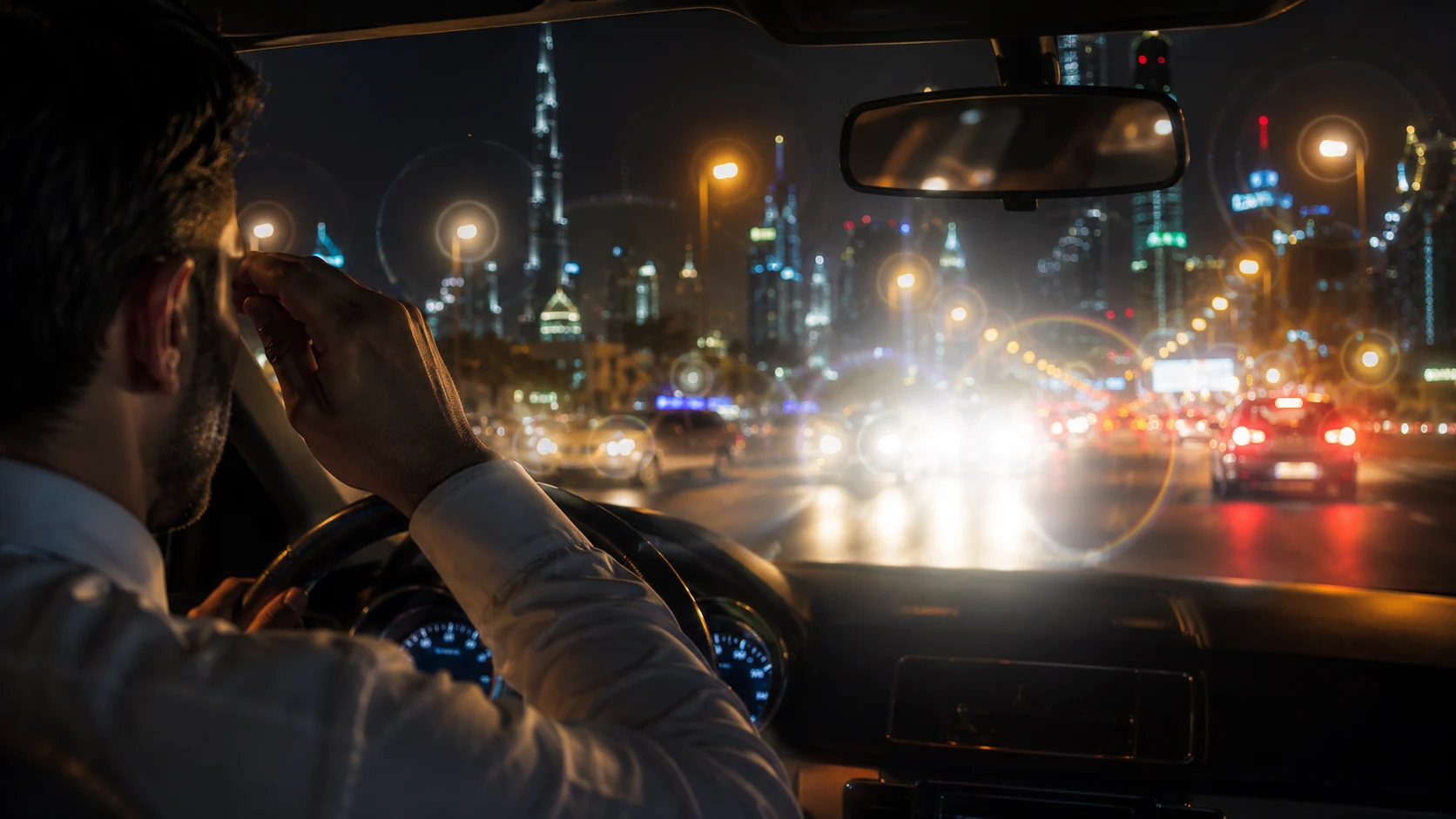
Comprehensive eye examination for glare, halos, blurry lights, and night driving vision problems at Ebsaar Eye Surgery Center in Dubai.
Quick Answer: Why Is Night Driving Harder Than Before?
Night driving can become harder when light scatters inside the eye or when the eye cannot focus clearly in low light. Common causes include cataracts, dry eye, astigmatism, keratoconus, corneal surface problems, outdated glasses, glare sensitivity, or other eye conditions. If headlights look too bright, halos appear around lights, or your glasses no longer help, book a comprehensive eye exam.
What Are Night Driving Vision Problems?
Night driving vision problems describe any difficulty seeing clearly or comfortably while driving after sunset. Some patients struggle with oncoming headlights. Others notice starbursts, halos, glare, hazy vision, or difficulty seeing lane markings and road signs.
In Dubai, night driving can be visually demanding because of strong headlights, reflective roads, illuminated signs, dry air, air conditioning exposure, screen-heavy workdays, and long driving distances. If symptoms keep happening, the goal is not only to update glasses. The goal is to check the full eye system: tear film, cornea, lens, retina, optic nerve, and prescription.
7 Reasons You May Have Glare, Halos or Blurry Lights at Night
Cataratas
Cataracts can make vision cloudy, increase glare, reduce contrast, and make night driving more difficult, especially with bright headlights.
Ojo seco
An unstable tear film can cause fluctuating blur, burning, watering, and difficulty with nighttime driving.
Astigmatismo
Uncorrected or changing astigmatism can make lights look stretched, blurred, or star-shaped, especially in low light.
Queratocono
Keratoconus can cause distorted vision, glare, and light sensitivity because the cornea becomes irregular in shape.
Old Glasses Prescription
If your prescription has changed, daytime vision may feel acceptable while night driving becomes harder and more tiring.
Corneal Surface Problems
Corneal scars, contact lens irritation, previous infection, or eye surface inflammation can scatter light and reduce clarity.
Glaucoma or Retina Concerns
Some eye conditions can affect contrast, peripheral vision, or visual confidence while driving, so a full eye health check matters.
When Night Driving Problems May Point to Cataracts
Cataracts are a common cause of glare and poor night driving, especially as the lens inside the eye becomes cloudy. Patients may describe cloudy vision, faded colors, halos around lights, increased glare, or difficulty seeing at night.
A new glasses prescription may help in some early cases, but if the lens is cloudy enough, glasses may not fully restore clarity. A cataract evaluation helps determine whether cataracts are contributing to your night driving symptoms and whether cataract treatment may be appropriate.
You can learn more in our guide to cataract symptoms in Dubai and our service page for cataract surgery in Dubai.
Night Driving Problems from Dry Eye
Dry eye can make vision unstable. You may drive clearly at the beginning of a trip, then notice blur, burning, watering, or glare after focusing for a while. Air conditioning, long screen use, contact lenses, and dry weather can make symptoms worse.
If blinking or lubricating drops temporarily improve your vision, dry eye may be part of the problem. However, repeated symptoms still need proper diagnosis because dry eye can overlap with allergy, blepharitis, contact lens irritation, or corneal surface problems.
Read more about dry eyes from computer use in Dubai if your symptoms are worse after screen-heavy workdays.
Night Driving, Astigmatism and Keratoconus
Astigmatism can make lights appear stretched, blurred, or streaky. Keratoconus can cause irregular astigmatism, distorted vision, glare, and sensitivity to light. Some patients notice that glasses help less than before, especially at night.
If your night vision symptoms include ghosting, double images, distorted lights, frequent prescription changes, or glasses that no longer feel sharp, a corneal assessment may be important. This may include corneal mapping to check the shape and regularity of the cornea.
You can also read about keratoconus treatment in Dubai.
Warning Signs You Should Not Ignore
Not every night driving problem is urgent, but some symptoms need faster assessment. Book an eye exam promptly if night driving difficulty is new, worsening, or affecting safety.
Book an Eye Exam If You Notice
What Happens During a Night Vision Eye Exam?
A comprehensive eye exam for night driving vision problems in Dubai should look beyond basic vision testing. The doctor may check your prescription, tear film, cornea, lens, eye pressure, retina, and optic nerve depending on your symptoms.
Can LASIK or Previous Eye Surgery Affect Night Driving?
Some patients notice glare, halos, or night driving concerns after certain eye procedures, especially if dry eye, residual prescription, large pupils, or corneal healing factors are involved. This does not mean every patient will have a problem, but it does mean symptoms should be evaluated properly.
If you are considering laser vision correction, a detailed LASIK consultation should include corneal mapping, dry eye evaluation, prescription assessment, and a discussion of night vision expectations. You can read more about LASIK consultation in Dubai.
How to Reduce Night Driving Discomfort Safely
The right solution depends on the cause. Avoid guessing or using random drops without a diagnosis, especially if symptoms are new or worsening. Still, some general habits can help reduce strain while you wait for your appointment.
- Keep your glasses prescription updated.
- Clean your glasses and car windshield regularly.
- Avoid driving when your eyes feel very dry or tired.
- Use lubricating drops only if suitable and recommended for your condition.
- Take screen breaks before long night drives.
- Do not wear scratched or old contact lenses.
- Book an eye exam if glare, halos, or blur are affecting driving safety.
Call Now for a Night Vision Eye Exam in Dubai
If headlights look too bright, night driving feels unsafe, or glasses no longer give you clear vision, book a comprehensive eye examination at Ebsaar Eye Surgery Center in Dubai.
¿Por qué elegir el Centro de Cirugía Ocular Ebsaar en Dubái?
Centro de Cirugía Oftalmológica Ebsaar provides advanced ophthalmology care in Dubai, including comprehensive eye examinations, cataract evaluation, dry eye treatment, cornea care, retina assessment, glaucoma management, LASIK consultation, and vision correction services.
For night driving symptoms, the important step is to find the real cause. At Ebsaar, your assessment can include the eye surface, cornea, lens, retina, eye pressure, and prescription, allowing the doctor to recommend the right treatment plan for your vision and lifestyle.
If you are searching for night driving vision problems in Dubai, glare and halos in Dubai, or eye exam for night driving Dubai, book a detailed eye assessment instead of waiting for symptoms to get worse.
Book an Eye Exam for Night Driving Vision Problems in Dubai
Do not ignore glare, halos, blurry lights, poor night contrast, or glasses that no longer help. Book a comprehensive eye exam at Ebsaar Eye Surgery Center in Dubai and get a personalized diagnosis.
Reserva tu citaFrequently Asked Questions About Night Driving Vision Problems in Dubai
¿Por qué veo halos alrededor de los faros por la noche?
Los halos alrededor de los faros pueden ocurrir con cataratas, ojo seco, astigmatismo, queratocono, problemas de la superficie corneal o cambios en la prescripción. Un examen ocular completo puede identificar la causa.
¿Pueden las cataratas dificultar la conducción nocturna?
Sí. Las cataratas pueden causar visión borrosa o nublada, deslumbramiento, sensibilidad a la luz, colores apagados y dificultad para ver de noche. Una evaluación de cataratas puede confirmar si las cataratas están afectando su visión al conducir.
¿El ojo seco puede causar visión borrosa al conducir de noche?
Sí. El ojo seco puede causar visión borrosa fluctuante, ardor, lagrimeo, sensibilidad a la luz y dificultad para conducir de noche, especialmente después de usar pantallas o exponerse al aire acondicionado.
¿Los problemas de conducción nocturna siempre se solucionan con gafas?
No. Las gafas ayudan si el problema es principalmente un error refractivo, pero el deslumbramiento y los halos también pueden ser causados por cataratas, ojo seco, problemas de la córnea, queratocono u otras afecciones oculares.
When should night vision problems be checked urgently?
Seek urgent care if night vision problems appear suddenly or occur with eye pain, sudden blurry vision, flashes, new floaters, a curtain-like shadow, severe headache, or vision loss.
Where can I book an eye exam for night driving vision problems in Dubai?
You can book an appointment at Centro de Cirugía Ocular Ebsaar en Dubái for a comprehensive eye exam and personalized treatment recommendation.