




Cataract Lens Options Dubai
Cataract Lens Options in Dubai: How to Choose Between Monofocal, Toric, Trifocal and EDOF IOLs
Choosing an intraocular lens (IOL) is one of the most important decisions before cataract surgery. The cloudy natural lens is removed and replaced with an artificial lens, and that choice can influence how you see at distance, on screens, while reading, and when driving at night.
This guide compares the main cataract lens options in Dubai, explains the important difference between optical lens designs and toric astigmatism correction, and shows which eye tests and lifestyle priorities help your ophthalmologist recommend a suitable IOL.
Important: There is no single “best cataract lens” for every patient. The right IOL depends on your eye measurements, cornea and retina health, astigmatism, optic nerve status, dry eye, previous eye surgery, lifestyle, night-driving needs, and realistic expectations about glasses after surgery.
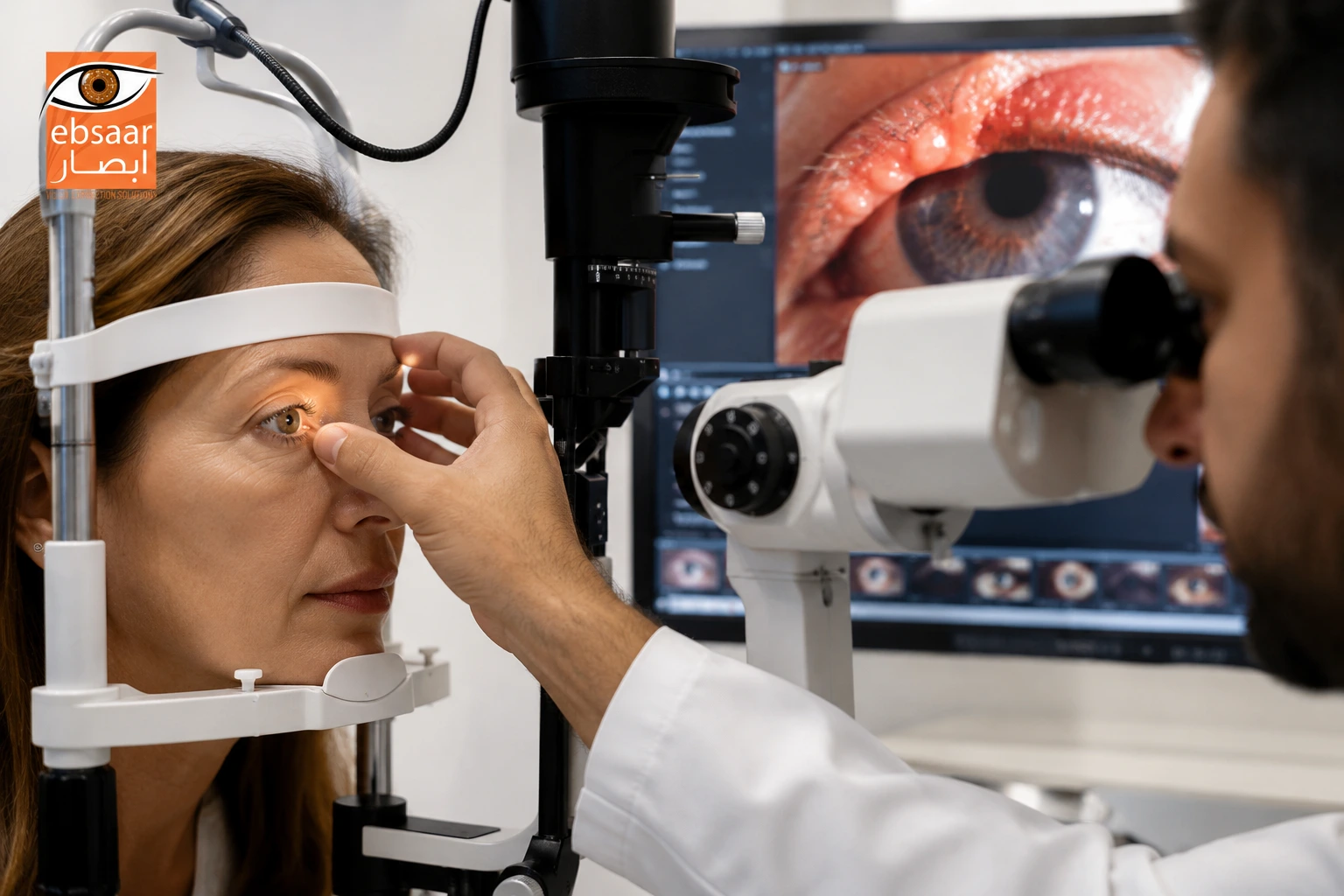
Personalized cataract lens assessment and IOL planning at Ebsaar Eye Surgery Center in Dubai.
Quick Answer: Which Cataract Lens Is Best?
The best cataract lens is the one that best matches your eye health and the distances that matter most in daily life. A monofocal IOL usually targets one main distance. Multifocal, trifocal and EDOF designs can provide a broader range of vision in selected patients, but each has different trade-offs. If you have regular corneal astigmatism, a toric version may also be considered. No IOL can guarantee perfect vision or complete freedom from glasses.
One Important Point Before You Compare IOLs
Monofocal, multifocal, trifocal and EDOF describe how the lens distributes focus. Toric describes astigmatism correction. This means toric is not a competing category in the same way: a patient may receive a monofocal toric lens, and some multifocal, trifocal or EDOF designs also have toric versions.
What Is an Intraocular Lens?
An intraocular lens, or IOL, is an artificial lens placed inside the eye during cataract surgery after the cloudy natural lens is removed. The IOL is selected before surgery based on eye measurements and your visual goals.
Patients searching for cataract lens options in Dubai are usually comparing whether they should choose a standard monofocal lens, a toric lens for astigmatism, or a premium lens option designed to reduce dependence on glasses. This decision should always be made after diagnostic testing and a detailed discussion with your ophthalmologist.
Why Lens Choice Matters Before Cataract Surgery
Cataract surgery can improve cloudy vision caused by cataracts, but the lens implant also helps determine how your eye focuses after surgery. This means your IOL choice can influence distance clarity, near tasks, reading, computer use, night driving, and whether glasses may still be needed.
Before Choosing a Cataract Lens, Your Doctor May Check
Main Cataract Lens Options in Dubai
The main optical designs discussed before cataract surgery include monofocal, multifocal, trifocal and extended depth of focus (EDOF) IOLs. If you have regular corneal astigmatism, your surgeon may also discuss a toric version. The right choice should be based on your measurements, eye health and visual priorities rather than marketing names alone.
Monofocal IOL
Designed mainly around one focal target. Many patients choose distance vision and use reading glasses for near tasks, although other targets may be discussed.
Multifocal IOL
Uses more than one optical focus to increase the usable range of vision and may reduce glasses dependence in selected patients. Glare, halos and contrast trade-offs should be discussed.
Trifocal IOL
Designed to provide functional vision at distance, intermediate and near ranges. Suitability depends on eye health and tolerance for possible night-vision symptoms.
EDOF IOL
Extends the range of relatively clear focus, commonly emphasizing distance and intermediate vision. Fine near work may still require reading glasses.
Toric Correction
Designed to reduce regular corneal astigmatism. Toric versions can exist within different optical lens categories and require accurate measurements and alignment.
Monovision / Blended Plan
Selected patients may use different focal targets between the two eyes. This strategy requires careful discussion and is not suitable for everyone.
Monofocal vs Trifocal vs EDOF vs Toric: What Is the Difference?
The comparison is easier when you separate range of focus from astigmatism correction. Monofocal, trifocal and EDOF describe different focusing strategies. Toric describes correction of regular corneal astigmatism and may be combined with more than one focusing strategy.
Can Cataract Lenses Reduce the Need for Glasses?
Some cataract lens options may reduce dependence on glasses, but no lens can guarantee complete freedom from glasses for every task. Even with advanced lenses, some patients may still need glasses for small print, prolonged reading, night driving, or specific work needs.
The goal is to choose a realistic vision plan. Your surgeon should explain what the lens can do, what it cannot do, and whether your eyes are suitable for premium lens options.
Who Needs Extra Caution With Presbyopia-Correcting IOLs?
Multifocal, trifocal and some EDOF strategies require careful patient selection. Your ophthalmologist may be more cautious when another condition already reduces image quality or contrast.
- Significant macular or retinal disease.
- Advanced glaucoma or meaningful optic nerve damage.
- Irregular corneal astigmatism, corneal scarring or ectatic disease.
- Severe or uncontrolled dry eye and ocular-surface disease.
- Other eye conditions that limit expected visual potential.
- Very high sensitivity to glare, halos or night-driving symptoms.
- Expectations that no lens technology can realistically meet.
These factors do not automatically decide the lens. They mean that suitability should be assessed individually after a complete eye examination.
Cataract Lens Options and Night Driving
Cataracts themselves can cause glare, halos and difficulty seeing in dim conditions. After surgery, IOL design can also influence how some patients experience bright lights, contrast and halos at night.
Multifocal and trifocal designs can produce glare or halos in some patients, while monofocal and EDOF designs have different optical profiles depending on the specific lens. If night driving is a major part of your work or lifestyle, tell your ophthalmologist before the final IOL decision. You can also read our guide to night driving vision problems in Dubai.
Cataract Lens Cost in Dubai: Why Prices Vary
Cataract lens cost in Dubai can vary because the IOL selected, diagnostic measurements, surgical planning, surgeon assessment and follow-up requirements may affect the final treatment plan. Toric and presbyopia-correcting strategies may involve additional measurements and planning.
Price should not choose the lens for you. A more expensive lens is not automatically better for a particular eye. The more useful question is whether the lens offers the right balance of visual range, optical quality, safety and realistic expectations for your needs. You can learn more in our guide to cataract surgery cost in Dubai.
What Happens During a Cataract Lens Consultation?
A cataract lens consultation is designed to identify the right treatment plan before surgery. Your doctor may discuss your symptoms, daily activities, driving habits, screen use, reading needs, medical conditions, and your expectations after cataract surgery.
Questions to Ask Before Choosing an IOL
Why Choose Ebsaar Eye Surgery Center in Dubai?
Ebsaar Eye Surgery Center provides advanced ophthalmology care in Dubai, including cataract assessment, cataract surgery, lens replacement planning, cornea care, retina evaluation, glaucoma management, dry eye treatment, and comprehensive eye examinations.
For patients comparing cataract lens options in Dubai, the clinic focuses on accurate diagnosis, modern diagnostic testing, patient safety, and personalized treatment planning. The goal is to select a lens option that fits your eye health, visual goals, and lifestyle rather than using a one-size-fits-all approach.
Book a Cataract Lens Assessment in Dubai
If you are comparing monofocal, toric, multifocal, trifocal, or EDOF lenses, book a cataract assessment at Ebsaar Eye Surgery Center in Dubai to understand which option may be suitable for your eyes.
Book Your AppointmentFrequently Asked Questions About Cataract Lens Options in Dubai
What are the main cataract lens options?
Common optical designs include monofocal, multifocal, trifocal and extended depth of focus (EDOF) IOLs. Toric versions are designed to reduce regular corneal astigmatism and may be available with different optical designs.
Is a trifocal cataract lens better than a monofocal lens?
Not automatically. A trifocal lens may provide a wider range of unaided vision in suitable patients, while a monofocal lens may be preferred when optical simplicity, contrast quality, night-vision priorities or another eye condition is more important.
Is a toric lens a type of multifocal lens?
Toric refers to astigmatism correction rather than the number of focal ranges. A toric IOL can be monofocal, and some multifocal, trifocal or EDOF designs also have toric versions.
Can cataract surgery correct astigmatism?
In suitable patients with regular corneal astigmatism, a toric IOL or another astigmatism-management strategy may reduce astigmatism during cataract surgery. Accurate corneal measurements are required before deciding.
Will I need glasses after cataract surgery?
Possibly. Glasses needs depend on the IOL design, focal target, astigmatism, eye health and the task. Some lenses are designed to reduce spectacle dependence, but no IOL guarantees complete freedom from glasses.
What is an EDOF cataract lens?
An EDOF lens is designed to extend the range of relatively clear focus beyond what a standard monofocal lens provides. It often supports distance and intermediate vision, while near performance and glasses needs vary by lens design and patient.
Where can I compare cataract lens options in Dubai?
You can book a cataract assessment at Ebsaar Eye Surgery Center in Dubai to review your eye measurements, astigmatism, eye health, lifestyle priorities and suitable lens options.