Lazy Eye (Amblyopia) Treatment in DubaiThe earlier, the stronger the eye.
A lazy eye (amblyopia) is reduced vision in one eye because the brain learns to ignore it during childhood, even though the eye itself often looks normal.
It affects up to 3 in 100 children, rarely corrects itself, and responds best to glasses, patching or atropine drops started before age 7.
Fast answer
Yes, a lazy eye can usually be treated. In clinical trials, just 2 hours of daily patching worked as well as 6 hours for moderate amblyopia, and atropine drops worked as well as patching. Older children and some adults can still improve.
Medically reviewed by Prof. Dr. Hani Sakla, Consultant Ophthalmologist
·
Last reviewed
3/100Children affectedUp to 3 in 100 children (NEI).
<7Best windowTreatment works best before age 7.
01SquintingShutting or covering one eye, especially in bright light or when reading.
02Head tiltTilting or turning the head to look at things.
03Eye turnOne eye drifting inward or outward.
04ClumsinessBumping into things on one side or poor depth judgement.
Interactive
How a lazy eye sees, and how patching helps
Move the slider to change how blurred the weaker eye is, then patch the strong eye to see why the brain is forced to use the weak one.
Strong eye
Patched
Brain usesStrong eye
Weaker (lazy) eye
Without treatment, the brain relies on the strong eye and keeps ignoring the weaker one.
Illustration only. It is not a vision test and cannot diagnose a lazy eye.
In 60 seconds
Lazy eye, explained simply
What amblyopia is, why age matters and how it is treated. The detail and the evidence follow below.
1What it is
A brain–eye problem
The eye may be healthy, but the brain has learned to favour the other eye and suppress this one.
Affects
Up to 3 in 100 children
Causes
Unequal prescriptions, eye turn, cataract, droopy lid
Goes away?
No, not on its own
2Why age matters
A critical window
The visual brain is most adaptable in early childhood, so treatment started young gives the strongest, most stable result.
Best
Before age 7
Still helps
Ages 7–17, with less improvement
Screening
At least once at ages 3–5
3How it is treated
Make the weak eye work
Correct the cause, then make the brain use the weaker eye by patching or blurring the strong one.
First step
Glasses for any prescription
Then
Patching or atropine drops
Duration
Usually months, with follow-up
Direct answer
Can a lazy eye be fixed?
Usually, yes, especially in young children. In trials by the U.S. Pediatric Eye Disease Investigator Group (PEDIG), 77% of children whose amblyopia came from unequal prescriptions improved by 2 or more lines within 15 weeks of wearing glasses alone. Patching or atropine then adds further improvement. Children treated after age 7 still improve, but less, and about 1 in 5 children lose some of the gain after treatment stops, which is why follow-up matters.
01Full eye examIncluding a cycloplegic (drops) refraction.
02Treat the causeGlasses, or surgery for cataract, droopy lid or eye turn.
03Train the weak eyePatching, atropine or filters, with regular checks.
Key takeaways
Lazy eye is common. Amblyopia affects up to 3 in 100 children and is a leading cause of reduced vision in one eye in children (NEI).
It is not the same as a squint. A lazy eye is reduced vision; a squint (strabismus) is an eye turn. A squint can cause a lazy eye, but many lazy eyes look perfectly straight.
It will not go away on its own. Children do not grow out of amblyopia.
Less patching than you think. For moderate amblyopia, 2 hours of patching a day worked as well as 6 hours, and atropine drops worked as well as patching (PEDIG, AAO).
Earlier is better, but it is rarely “too late”. Results are best before age 7; children aged 7–17 can still improve.
Follow-up matters. About 20% of children regress after treatment stops, especially if it is stopped suddenly.
What is a lazy eye (amblyopia)?
Amblyopia, commonly called lazy eye, is reduced vision in one eye (rarely both) that develops in childhood because the eye and the brain are not working together properly. When one eye sends a blurred or misaligned image, the brain starts to rely on the clearer eye and suppresses the other. Over time the connection between the weaker eye and the brain does not develop fully, and glasses alone may no longer give normal vision.
Because the stronger eye compensates, many children have no idea anything is wrong. Amblyopia is often picked up at a school or routine eye examination rather than at home, which is why the National Eye Institute recommends that children have at least one vision screening between ages 3 and 5.
Lazy eye vs squint (strabismus): what is the difference?
People often use “lazy eye” for an eye that turns, but the two are different conditions:
Lazy eye (amblyopia)
A vision problem: one eye sees less clearly because the brain suppresses it. The eye can look completely normal and straight.
Squint (strabismus)
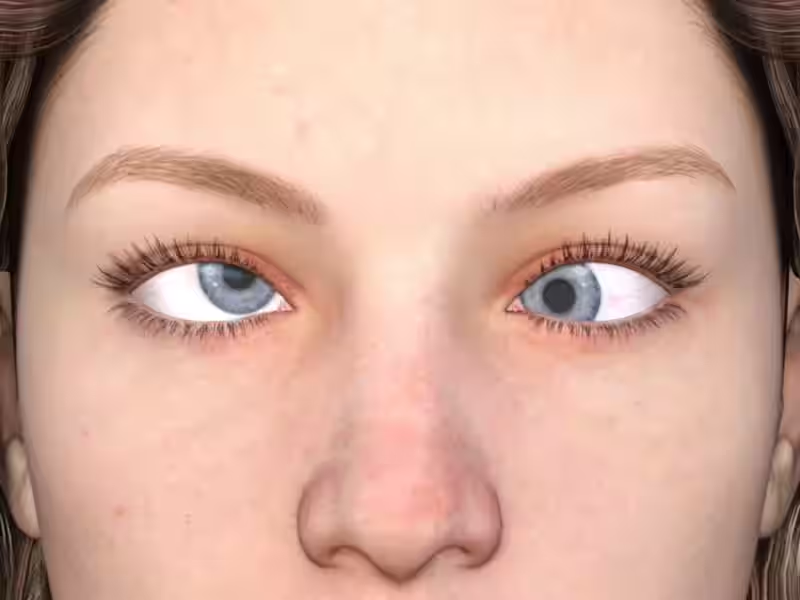
An alignment problem: the eyes point in different directions, inward, outward, up or down. It is one of the main causes of amblyopia, and can also cause double vision in adults.
What causes a lazy eye?
Anything that stops one eye sending a clear, focused image to the brain during early childhood can cause amblyopia. The three main types are named after their cause:
Types of amblyopia by cause
Type
What happens
Example
First treatment
Refractive (anisometropic)
The two eyes have very different prescriptions, so one image is always blurred.
One eye far more long-sighted or astigmatic than the other.
Glasses or contact lenses.
Strabismic
The eyes are misaligned; the brain ignores the turned eye to avoid double vision.
An eye that turns inward (esotropia) or outward (exotropia).
Glasses, patching; sometimes eye-muscle surgery.
Deprivation
Something physically blocks light entering the eye.
Risk is higher in children born prematurely or with low birth weight, those with developmental delay, and those with a family history of amblyopia, squint or childhood cataract. These children benefit from earlier and more regular eye examinations.
Lazy eye symptoms: signs parents notice
Amblyopia often has no obvious signs, especially when the eyes look straight. Tick anything you have noticed. It is not a diagnosis, but it helps you decide when to book an eye examination.
0/8
No signs ticked. Every child should still have at least one vision screening between ages 3 and 5.
A useful clue is that a child with amblyopia often objects strongly when the good eye is covered, but not when the lazy eye is covered.
Unequal prescriptions, an eye turn or anything blocking vision can lead to amblyopia.
Diagnosis
How a lazy eye is diagnosed
Diagnosis needs a full eye examination adapted to the child’s age. Babies and toddlers who cannot read letters can still be tested reliably.
01
Vision in each eye
Age-appropriate charts with pictures, shapes or letters; for babies, how well each eye fixes and follows.
02
Cycloplegic refraction
Drops relax focusing so the true prescription of each eye can be measured. Vision is blurry for a few hours afterwards.
03
Alignment and eye health
A cover test checks for a squint, and the doctor examines the lens, retina and optic nerve for a physical cause.
Severity: how much vision differs between the eyes.
Type: refractive, strabismic, deprivation or mixed.
Prescription: any difference between the eyes.
Alignment: whether a squint is present.
Blockage: cataract, droopy lid or other cause.
Plan: which treatment, and how often to review.
Lazy eye treatment options
Treatment has two goals: remove whatever is blurring or blocking the weaker eye, then make the brain use that eye so its vision can develop. Your ophthalmologist chooses the combination based on the cause, severity and age.
Lazy eye treatments compared
Treatment
How it works
Typical use
What the evidence says
Glasses or contact lenses
Give each eye a sharp image.
Always the first step when there is a prescription.
77% of children with unequal prescriptions improved 2+ lines in 15 weeks with glasses alone (PEDIG).
Eye patching
Covers the strong eye so the brain must use the weaker eye.
Hours per day, set by severity and age.
2 hours a day was as effective as 6 hours for moderate amblyopia in children aged 3–7 (PEDIG).
Atropine eye drops
Blur near vision in the strong eye.
Alternative to patching; often daily or weekend-only.
As effective and lasting as patching for moderate amblyopia; weekend drops worked as well as daily.
Bangerter filters
A translucent film on the strong eye’s lens blurs it slightly.
Milder cases or when patching is not tolerated.
A gentler option; used for selected children.
Binocular (dichoptic) therapy
Games or videos show different images to each eye while glasses are worn.
An add-on for selected children.
A newer option; ask whether it is suitable.
Surgery
Treats the cause: eye-muscle surgery, cataract removal or eyelid lift.
When a squint, cataract or droopy lid is the cause.
Surgery fixes the cause, not the amblyopia; patching or glasses are usually still needed.
Swipe to compare →
Glasses and contact lenses
If one eye needs a stronger prescription, glasses alone can produce a large improvement, and many children are simply monitored in glasses for several weeks before anything else is added. Glasses must be worn all day to work.
Eye patching (occlusion therapy)
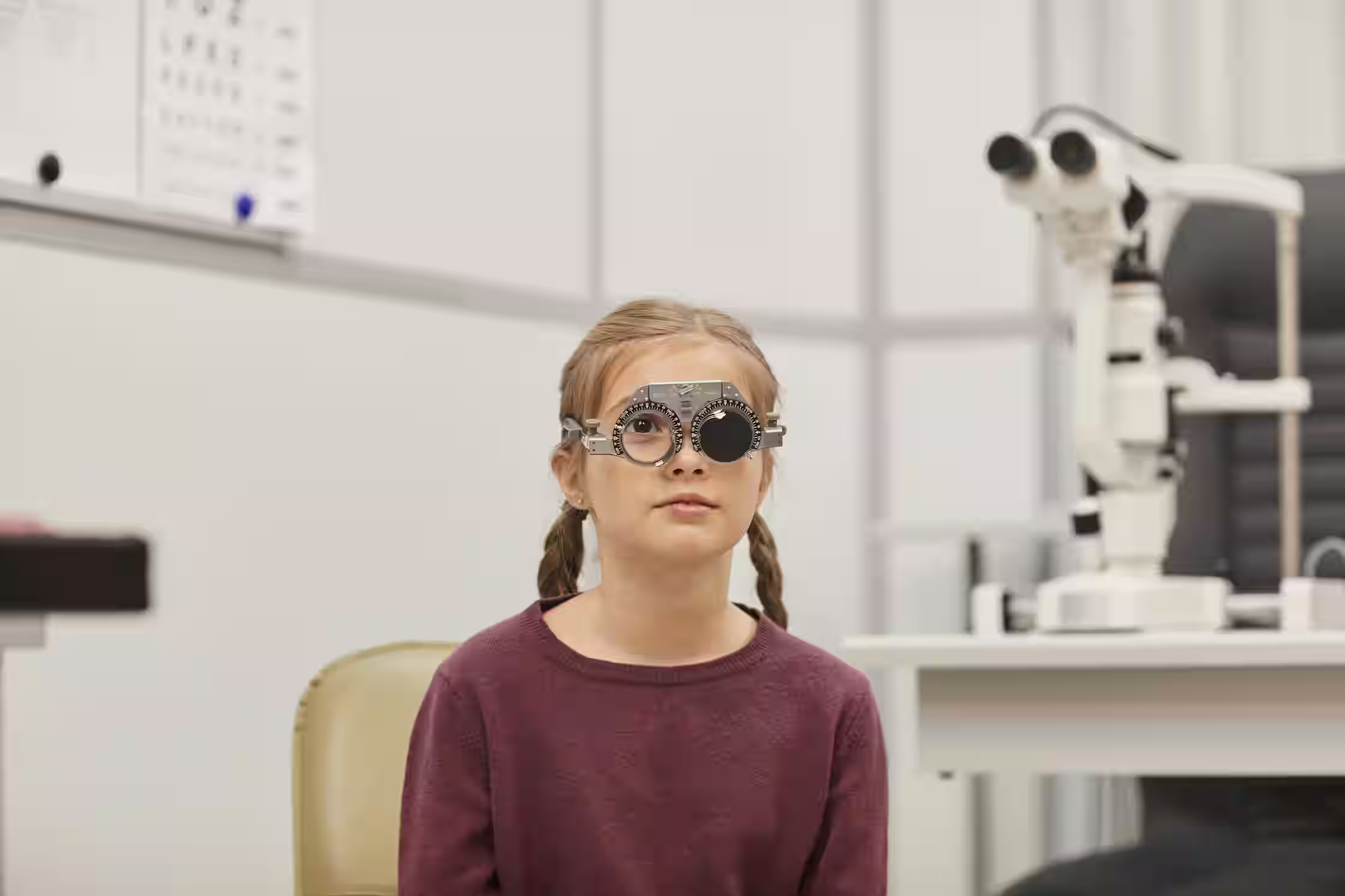
An adhesive patch covers the stronger eye for part of the day, forcing the brain to use the weaker one. Children often do better when patching is combined with close-up activities such as drawing, puzzles or tablet games. The number of hours is prescribed and reviewed regularly; too much patching can blur the good eye, so follow the plan exactly.
Atropine eye drops
One drop of atropine in the strong eye blurs its near vision, so the brain switches to the weaker eye. Many families find it easier than patching because there is nothing for the child to peel off. Side effects can include light sensitivity from the enlarged pupil.
Lazy eye surgery
Surgery is not a first-line treatment for amblyopia itself. It is used when a physical problem causes it: strabismus surgery adjusts the eye muscles to straighten a turned eye, cataract surgery removes a cloudy lens, and ptosis surgery lifts a droopy lid. In children, eye-muscle surgery is done under general anaesthesia, usually as a day case. Glasses, patching or drops usually continue afterwards to strengthen the vision.
What age is best to treat lazy eye? Is it ever too late?
The earlier treatment starts, the better, but amblyopia research has shown that the window is longer than once believed.
PEDIG trials found that children aged 7 to 17 can still improve with glasses plus patching or atropine, although the gains are smaller and less stable than when treatment starts before age 5. Teenagers who were never treated before tend to respond better than those who were. In adults, results are more variable; improvement is sometimes possible, but most adult treatment focuses on correcting the prescription, protecting the good eye and treating any squint.
How long does lazy eye treatment take?
Vision often starts to improve within a few weeks, but it usually takes months to reach the best result, according to the National Eye Institute. Many children are treated for 6 months to 2 years depending on the cause, severity, age and how consistently the plan is followed.
Weeks 0–4Examination, cycloplegic refraction and glasses if needed. The brain starts adapting to a clearer image.
Months 1–4Patching or atropine is added if vision is still reduced. Most improvement typically happens in this period.
Months 4–12+Treatment continues until vision stops improving, with visits every few weeks to months.
After treatmentTreatment is tapered rather than stopped suddenly, and vision is checked for at least a year because about 20% of children regress.
Lazy eye in adults: can it be treated?
Amblyopia rarely starts in adulthood; it is usually an untreated childhood amblyopia that is found later. Adults should still have a full examination to correct any prescription, check eye health and look for a squint. Laser vision correction such as LASIK can correct the prescription in suitable adults, but it cannot restore vision lost to amblyopia. Protecting the good eye matters for life, including safety glasses for sports and hazardous work.
Lazy eye treatment cost in Dubai
The cost depends on the examination and tests needed, whether glasses, patches or drops are prescribed, how many follow-up visits are required and whether surgery is part of the plan. Ebsaar explains the treatment plan and costs after the first examination. Check your insurance policy for cover of eye examinations and treatment.
Ebsaar · Dubai
Lazy eye care at Ebsaar Eye Surgery Center
Ebsaar Eye Surgery Center in Jumeirah, Dubai examines children and adults for amblyopia, squint and the conditions that cause them, and plans treatment around the child’s age and daily routine. Related services include double vision (diplopia), cataract surgery and vision correction.
Child-friendly testingAge-appropriate vision tests, from babies to teenagers.
Evidence-based plansGlasses, patching, atropine and follow-up based on clinical trial evidence.
Jumeirah, DubaiVilla 32A, Jumeirah Beach Road, Dubai, United Arab Emirates.
Next step
Every year counts. Book your child’s eye exam.
Contact Ebsaar Eye Surgery Center in Dubai to arrange a lazy eye examination for your child or yourself.
Short, direct answers to the questions parents and patients ask most. They do not replace an eye examination.
How do people with a lazy eye see?
Vision in the lazy eye is blurred or less detailed, even with glasses, while the other eye sees normally. Because the brain relies on the strong eye, most people, especially children, do not notice a problem. Depth perception can be reduced, which may make catching a ball or judging stairs harder.
Is a lazy eye the same as a squint?
No. A lazy eye (amblyopia) is reduced vision in one eye; a squint (strabismus) is an eye that turns in, out, up or down. A squint is a common cause of amblyopia, but many children with a lazy eye have perfectly straight eyes.
What causes a lazy eye?
A lazy eye develops when one eye sends a blurred or misaligned image to the brain in early childhood. The main causes are a big difference in prescription between the eyes, a squint, and anything blocking vision, such as a congenital cataract or a droopy eyelid.
Will a lazy eye correct itself?
No. Children do not grow out of amblyopia. Without treatment the weaker eye usually stays weak for life, so an eye examination and treatment are needed as early as possible.
How is a lazy eye fixed?
Treatment starts with glasses or contact lenses for any prescription. If vision is still reduced, the strong eye is patched for part of the day or blurred with atropine drops so the brain has to use the weaker eye. Surgery is used when a squint, cataract or droopy lid causes the problem.
How many hours a day should my child wear an eye patch?
Your ophthalmologist sets the hours. In PEDIG clinical trials, 2 hours a day worked as well as 6 hours for moderate amblyopia in children aged 3 to 7, and severe cases may need longer. Follow the prescribed plan and attend every review.
Are atropine drops as good as patching?
For moderate amblyopia, yes. PEDIG trials found atropine drops in the strong eye were as effective and as lasting as patching, and weekend-only drops worked as well as daily drops. Many families find drops easier than patches.
At what age should my child have an eye test for lazy eye?
The U.S. National Eye Institute recommends at least one vision screening between ages 3 and 5. Children with a squint, a family history of amblyopia, premature birth or developmental delay should be examined earlier.
When is it too late to treat a lazy eye?
Treatment works best before age 7, but children aged 7 to 17 can still improve with glasses plus patching or atropine, though gains are smaller. In adults, results vary, so an examination is still worthwhile.
Can adults fix a lazy eye?
Sometimes partly. Amblyopia treatment is usually less effective in adults than in children. Adults benefit from correcting any prescription, treating a squint and protecting the good eye. LASIK can correct the prescription in suitable adults but cannot restore vision lost to amblyopia.
How long does lazy eye treatment take?
Vision often starts to improve within a few weeks, but the best result usually takes months. Many children are treated for 6 months to 2 years, followed by monitoring after treatment stops.
Can a lazy eye come back after treatment?
Yes. About 20% of children lose some of the improvement after treatment stops, especially when it is stopped suddenly. That is why treatment is tapered and vision is checked for at least a year afterwards.
Can a lazy eye cause blindness?
Untreated amblyopia can cause permanent, lifelong reduced vision in the affected eye, but it does not cause total blindness. The main risk is that if the good eye is later injured or diseased, overall vision is seriously affected.
Does lazy eye surgery fix amblyopia?
Not on its own. Surgery corrects the cause, such as straightening a turned eye, removing a cataract or lifting a droopy eyelid. Glasses, patching or drops are usually still needed afterwards to strengthen the weaker eye.
How much does lazy eye treatment cost in Dubai?
The cost depends on the tests needed, whether glasses, patches or drops are prescribed, the number of follow-up visits and whether surgery is required. Ebsaar explains the plan and costs after the first examination.