




1
Crusts or Flakes Around the Eyelashes
Dandruff-like flakes, scales or crusting can collect around the roots of the eyelashes. It is often easier to notice after waking.
Red, itchy, burning or crusty eyelids can be caused by blepharitis, but similar symptoms may also occur with dry eye, eye allergy, irritation or infection. Knowing the pattern of symptoms can help you understand when a routine eye examination is sensible and when faster medical assessment is important.
Importante: Blepharitis is usually manageable, but eye pain, a significant change in vision, very marked redness, worsening light sensitivity, or severe symptoms while wearing contact lenses can indicate a different or more serious eye problem. Arrange prompt assessment by an eye-care professional rather than relying on self-treatment.
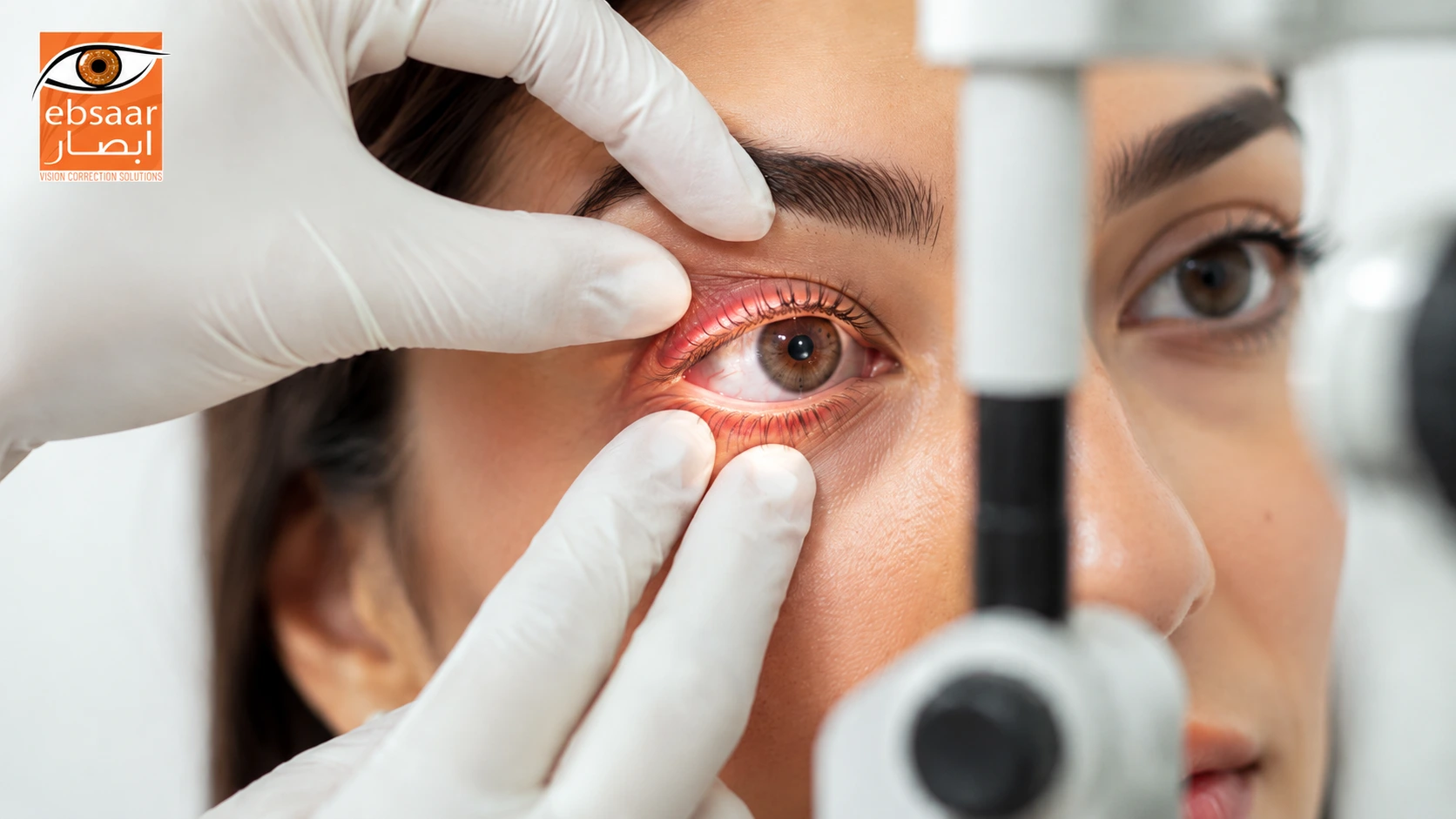
Common blepharitis symptoms include red or swollen eyelid margins, crusts or flakes around the eyelashes, itching, burning or stinging, a gritty feeling, dry or watery eyes, eyelids that stick together in the morning, and sometimes temporary blurred vision or light sensitivity. Symptoms often come and go. Because several eye conditions can look similar, persistent or recurrent symptoms are best assessed by an ophthalmologist.
Blepharitis is inflammation of the eyelid margins — the area around the roots of the eyelashes and the openings of the eyelid oil glands. It can make the eyelids red, swollen, itchy, sore or crusty and can also disturb the tear film, creating dry-eye-like symptoms.
The condition may be associated with an increased amount of bacteria around the eyelids, blocked or irritated meibomian oil glands, dandruff or seborrheic skin changes, rosacea, and in some cases Demodex mites. More than one factor can be present at the same time, which is one reason the right diagnosis matters.
If you are mainly looking for treatment information, see Ebsaar’s dedicated guide to blepharitis treatment in Dubai.
The exact combination varies from person to person. Some people mainly notice crusting at the lash line, while others describe burning, dryness, watering or morning stickiness.
Dandruff-like flakes, scales or crusting can collect around the roots of the eyelashes. It is often easier to notice after waking.
The edges of the eyelids may look irritated, red, puffy or inflamed, particularly close to the lash line.
Blepharitis can cause persistent eyelid irritation or a burning and stinging sensation that becomes more noticeable during a flare-up.
Inflamed eyelids and an unstable tear film can make the eye feel sandy, gritty or as though a small particle is trapped under the eyelid.
Blepharitis can occur together with dry eye. Paradoxically, an irritated or unstable eye surface can also trigger reflex tearing, so the eyes may feel dry yet water frequently.
Some people wake with eyelids that feel heavy or stuck together because crusts and secretions have accumulated along the lash line overnight.
An unstable tear film may cause vision to fluctuate or blur temporarily. Some patients also notice greater light sensitivity. Persistent, sudden or significant vision change needs medical assessment.
These conditions overlap, and a person can have more than one at the same time. The table below is a practical guide, not a substitute for diagnosis.
| Condition | Typical clues | What makes it different? |
|---|---|---|
| Blefaritis | Crusting at lashes, red lid margins, morning stickiness, burning, itching, gritty feeling. | The eyelid margin and lash line are usually prominent parts of the problem. |
| Ojo seco | Burning, grittiness, fluctuating vision, watering, tired eyes. | Symptoms often increase with prolonged screen use, reduced blinking or dry environments. |
| Alergia ocular | Itching, watering, redness and eyelid puffiness. | Intense itching and a clear relationship to allergens or products can be an important clue. |
| Conjunctivitis / Infection | Redness, discharge, irritation and sometimes eyelid crusting. | The pattern of discharge, pain, exposure history and whether one or both eyes are affected may point to another diagnosis. |
For related symptoms, you can also read Ebsaar’s pages on tratamiento para el ojo seco, eye allergy treatment in Dubai y red eye in Dubai.
Blepharitis is often a long-term condition with repeated flare-ups. The eyelid margins contain oil-producing meibomian glands that help stabilize the tear film. When these glands become blocked or inflamed, irritation and dry-eye symptoms can persist or recur.
Skin conditions such as rosacea or dandruff may also contribute. The goal of management is therefore usually long-term control of the underlying eyelid and tear-film problem rather than expecting one short course of treatment to permanently remove every symptom.
These factors do not necessarily cause blepharitis, but they may aggravate associated dryness, irritation or allergy symptoms and are worth discussing during an eye examination.
Doctors may describe blepharitis according to the part of the eyelid that is most affected.
| Type | Where it occurs | Common associations |
|---|---|---|
| Anterior blepharitis | The outer front edge of the eyelid around the eyelashes. | Bacteria around the lash roots, dandruff-like skin changes and, less commonly, mites or allergy-related factors. |
| Posterior blepharitis | The inner eyelid margin where the meibomian oil glands open. | Meibomian gland dysfunction, tear-film instability and rosacea. |
| Mixed blepharitis | Features of both the front and back of the eyelid margin. | A combined approach may be needed when both lash-line inflammation and oil-gland dysfunction are present. |
Book an eye examination if symptoms are persistent, recurring, uncomfortable, or not improving with sensible eyelid care. Arrange faster assessment if you have symptoms that could point to a more serious eye-surface or corneal problem.
Diagnosis starts with an eye examination. The ophthalmologist looks closely at the eyelids, eyelash roots and eye surface and considers the pattern of symptoms. The doctor may also assess whether blocked meibomian glands, dry eye, allergy, infection, contact-lens irritation or a skin condition is contributing.
En Centro de Cirugía Oftalmológica Ebsaar in Dubai, the aim is to identify the cause of the eyelid inflammation before recommending treatment, rather than treating every red or irritated eye in the same way.
Treatment depends on the type and severity of blepharitis and any related dry eye or skin condition. Common approaches can include eyelid hygiene, warm compresses, lubricating eye drops and prescription medication when clinically indicated. Antibiotic or steroid eye medication should only be used under professional guidance.
For a full breakdown of treatment options and long-term eyelid care, visit Tratamiento para la Blefaritis en Dubái. Keeping the detailed treatment information on that dedicated page also helps patients find the right information without repeating the same content across multiple Ebsaar pages.
Blepharitis usually causes discomfort more than lasting visual damage, but tear-film instability can make vision temporarily blurred or fluctuate between blinks. Less commonly, significant inflammation can affect the front surface of the eye. If your vision is persistently blurred, suddenly changes, or is accompanied by pain or marked redness, arrange an eye examination.
If blurred sight is your main symptom, see Ebsaar’s guide to blurry vision in Dubai.
Blepharitis often behaves as a chronic or recurring condition. Many people can control symptoms effectively, but ongoing eyelid care and management of related conditions may be needed to reduce future flare-ups. If symptoms repeatedly return, identifying the underlying pattern is more useful than repeatedly switching between over-the-counter eye drops without an examination.
Book an eye examination at Ebsaar Eye Surgery Center in Dubai for an assessment of eyelid inflammation, dry eye and related eye-surface symptoms.
Early symptoms vary, but many people notice irritation at the eyelid edges, itching or burning, gritty eyes, or flakes and crusts around the eyelashes — often most noticeable in the morning.
No. Blepharitis primarily affects the eyelids, while dry eye involves the tear film and eye surface. They often occur together because the eyelid oil glands help keep tears stable.
Yes, it can cause temporary or fluctuating blur when the tear film becomes unstable. Persistent, sudden or significant visual change should be assessed by an eye doctor.
They can be. Crusting and eyelid stickiness are commonly noticed after waking because debris and secretions may collect along the lash line overnight.
Blepharitis often affects both eyelids, but symptoms may not feel identical on each side. New or persistent symptoms mainly in one eye deserve an examination because other conditions can look similar.
They can aggravate sensitive eyelid margins in some people, particularly if residue or adhesive irritates the skin or lash line. Stop products that appear to trigger symptoms and seek assessment if irritation continues.
Arrange an examination when symptoms keep returning, remain uncomfortable or fail to improve. Seek prompt assessment for eye pain, significant redness, worsening light sensitivity or a meaningful change in vision.
You can book an eye examination at Centro de Cirugía Ocular Ebsaar en Dubái for assessment of eyelid inflammation and related dry-eye or eye-surface symptoms.
This patient guide is designed for general education and should not replace an individual eye examination. Key medical references include: